
Artificial intelligence is no longer a futuristic promise but a present reality within the world of finance. Far from being confined to laboratories or highly specialized sectors, AI is now integrated into products and services that millions of people use daily to manage money, assess risk, or analyze market trends.
From algorithms that process enormous volumes of data to systems that optimize investment portfolios efficiently, artificial intelligence is redefining many practices that traditionally required manual analysis and extended time. This evolution is not only transforming how financial institutions operate, but also expanding access to advanced decision-making tools for investors and everyday users.
In this article, we explore real-world applications and current uses of AI in the financial sector, explaining how these tools work, in what contexts they are applied, and what benefits they provide to those seeking to better understand today’s digital economy.
What Is Artificial Intelligence Applied to Finance?
AI applied to finance involves the use of algorithms and automated systems capable of analyzing large volumes of financial data, identifying patterns, and generating responses based on that information.
Unlike traditional systems, AI:
- Learns from data
- Improves performance over time
- Detects complex relationships between variables
In the financial context, this is particularly useful due to the vast amount of information generated daily.
Why AI Is Relevant in the Financial Sector
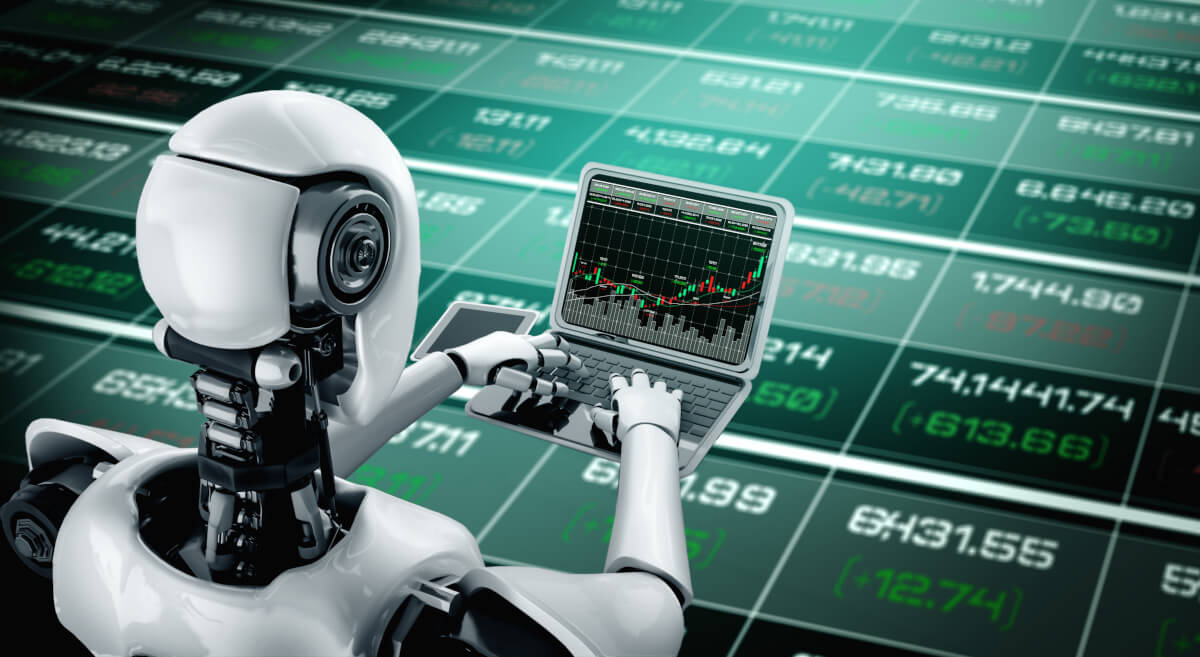
The financial sector handles continuous, real-time data: transactions, market prices, economic indicators, and user behavior. Analyzing this information manually would be slow and inefficient.
AI provides:
- Speed in analysis
- The ability to process massive datasets
- Reduction of human error
- Greater operational efficiency
For these reasons, artificial intelligence has become a key component of digital finance.
Main Applications of AI in Finance
Artificial intelligence is used across multiple areas of the financial system. Some of the most common applications include the following.
Financial Data Analysis
AI algorithms can analyze large amounts of financial data to identify trends, anomalies, and relevant patterns. This enables a deeper understanding of economic behavior without manually interpreting each data point.
Fraud Detection
One of the most widespread applications of AI in finance is the detection of unusual activity. Systems can identify behavior that deviates from normal patterns and issue real-time alerts about potential fraud.
Risk Assessment
AI is used to analyze financial risk by considering multiple variables simultaneously. This helps in understanding complex economic scenarios and anticipating potential problems.
Automation of Financial Processes
Many repetitive financial tasks can be automated through AI, such as:
- Transaction verification
- Data classification
- Internal process management
This frees up resources and improves the efficiency of financial organizations.
The Relationship Between AI and Digital Finance
Artificial intelligence does not operate in isolation. It forms part of the broader digital finance ecosystem, alongside other technologies such as cloud computing and data analytics.
This integration enables:
- Faster financial systems
- Greater service personalization
- Improved information management
- Scalability of digital platforms
Thanks to AI, digital finance can better adapt to a dynamic economic environment.
AI, Data, and Big Data in the Financial System
AI depends directly on data. In the financial sector, the use of Big Data is essential for intelligent systems to function properly.
Why Data Is Key
- It enables the training of AI models
- It improves analytical accuracy
- It helps interpret financial behavior
- It facilitates informed decision-making
Without high-quality data, AI loses much of its usefulness in finance.
The Impact of AI on Investments

Investments are also influenced by artificial intelligence. Access to automated analysis tools has changed how financial information is interpreted.
AI makes it possible to:
- Analyze multiple market variables
- Identify historical patterns
- Better understand volatility
It is important to emphasize that AI does not eliminate risk; rather, it helps to better understand it from an informational perspective.
Risks and Limitations of AI in Finance
Despite its advantages, artificial intelligence also presents limitations that must be understood.
Main Challenges
- Dependence on data quality
- Lack of transparency in some algorithms
- Risk of bias in models
- Overreliance on automated systems
For this reason, human oversight and financial education remain essential.
Ethics and Responsibility in the Use of Financial AI
The use of AI in finance raises important ethical questions, particularly regarding privacy and responsible data usage.
Key Aspects to Consider
- Protection of personal information
- Transparency in algorithmic use
- Responsible automation practices
These elements are fundamental to building trust in the digital financial system.
The Future of AI in Finance
Artificial intelligence will continue to evolve and expand its presence in finance. Its integration with other technologies will enable increasingly sophisticated systems, but it will also require greater understanding from both users and organizations.
The true value of AI does not lie in replacing human decisions, but in improving the quality of available information.
Conclusion: Understanding AI to Understand Modern Finance
The integration of artificial intelligence into finance has opened new dimensions in the analysis, management, and interpretation of economic data. By automating complex processes and offering predictions based on patterns that were once invisible to the human eye, AI enables a deeper understanding of markets, more efficient risk management, and access to strategies that were until recently beyond the reach of many users.
However, these advantages also require critical understanding: knowing how these tools function, recognizing their limitations, and identifying the contexts in which they provide real value. For those seeking to interpret modern finance and participate in the digital economy in an informed way, becoming familiar with real AI applications is a key step.
Ultimately, artificial intelligence does more than modify financial processes; it transforms how we think about money, investments, and growth opportunities in an environment that is rapidly advancing toward deep technological integration..