
Beginning to understand the world of investing can seem intimidating, especially when it is presented with technical terminology or abstract concepts. However, it is possible to make these ideas accessible without sacrificing precision, even if you have no prior experience in finance or financial markets.
Investments are part of everyday economic life: from depositing money into an interest-bearing account to allocating resources into assets that may generate growth over time. In a context where the digitalization of services and access to investment platforms continue to expand, understanding the fundamentals that govern these decisions becomes increasingly valuable.
In this article, we present the basic concepts of investing in a clear and progressive way, with the goal of helping you build a solid foundation to interpret how capital can work in your favor over the long term—without needing to be an expert.
What Are Investments?
In general terms, an investment consists of allocating resources—usually money—to an asset or project with the expectation that it will generate value over time. This expectation does not imply guarantees, but rather a relationship between risk, time, and potential outcome.
Investments exist because:
- Capital can be used to generate economic activity
- Businesses require funding to grow
- Markets channel resources into different sectors
From this perspective, investing is a key component of how global finance operates.
Why Financial Markets Exist

Financial markets are the environment where those who need capital connect with those who provide it. They function as an organized exchange system that facilitates the movement of money within the economy.
Main Functions of Financial Markets
- Allocate resources efficiently
- Provide liquidity
- Offer information about prices and value
- Connect economies and sectors
Without these markets, the modern economy would be far more rigid and less dynamic.
General Types of Assets in Investing
Although there are many classifications, assets can be understood in general terms from an educational standpoint.
Financial Assets
These include instruments linked to financial markets and systems. Their value typically depends on economic, corporate, and global factors.
Real Assets
These are related to tangible goods or physical resources. They are also part of the economic system and may be influenced by financial dynamics.
Understanding this distinction helps clarify how capital is distributed within the financial system.
The Relationship Between Risk and Return
One of the most important concepts in investing is the relationship between risk and return. In simple terms, value generation does not exist without some level of uncertainty.
What Risk Means in Investing
Risk refers to the possibility that results may differ from expectations. It may be related to:
- Economic changes
- Technological factors
- Global events
- Market behavior
Return, on the other hand, represents the potential compensation for assuming that risk.
The Role of Time in Investing
Time is a fundamental element in any investment. Markets do not move in a linear fashion, and results often depend on broader time horizons.
From an educational perspective:
- The short term tends to be more volatile
- The long term allows fluctuations to be absorbed
- Patience is a structural factor within the financial system
Understanding time helps interpret investment behavior within modern finance.
Technology and Investing in Today’s Economy
Technology has profoundly transformed how people access investment information. Digital platforms, automated analysis, and real-time data have reshaped the financial environment.
Key Technology-Driven Changes
- Greater access to financial information
- Clearer data visualization
- Automation of analysis
- Reduced informational barriers to entry
This does not eliminate the complexity of investing, but it does make understanding it more accessible from an educational standpoint.
Artificial Intelligence and Investment Analysis
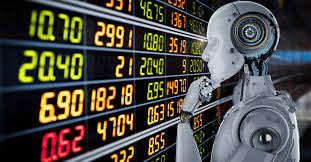
Artificial intelligence also plays an important role in analyzing the investment environment. It enables the processing of large volumes of data and the detection of historical patterns that help interpret market behavior.
It is important to emphasize that:
- AI supports analysis; it does not guarantee results
- Data must be interpreted correctly
- Economic context remains essential
Artificial intelligence enhances the quality of information, but it does not replace human judgment.
Risks and Limitations in the World of Investing
Understanding investing also means recognizing its limits. Access to information and technology does not eliminate the inherent risks of the financial system.
Main Challenges
- Market volatility
- Excess information without context
- Emotional reactions
- Lack of financial education
These factors reinforce the importance of an informed and responsible approach.
Why Understanding Investing Is Part of Financial Education
Even if a person does not actively participate in markets, understanding how investments work helps to:
- Interpret economic news
- Understand business decisions
- Analyze economic growth
- Recognize the role of capital in society
Investments are not merely a financial tool, but a structural component of the modern economy.
Conclusion: Understanding Before Participating
Exploring the fundamental concepts of investing from a clear and accessible perspective not only facilitates understanding of the financial system, but also enables more informed decisions regarding money management. Beyond figures or complex theories, what matters most is understanding what it means to allocate resources with expectations of return, how risk and time interact, and what role these elements play in personal and global finance.
As more people gain access to digital tools to manage their resources, the ability to interpret investment information becomes a significant advantage. While knowledge does not completely eliminate uncertainty, it does allow individuals to face it with greater judgment and confidence.
By understanding the basic principles of investing, you are building a foundation that not only helps you better comprehend how markets function, but also supports more conscious financial decisions aligned with your personal objectives.