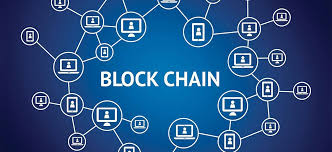
In an increasingly interconnected world, the boundary between technology and the global economy is rapidly fading. This is not merely about digital tools accelerating processes—it is about how they are transforming the very structures of markets, institutions, and economic decisions that affect individuals and businesses alike.
From platforms that enable real-time international transactions to intelligent systems capable of analyzing global economic trends, technological innovation has reshaped the rules of the financial landscape. This convergence is especially evident in sectors where data management and automation play a central role—such as finance, international trade, and investment—creating new opportunities while introducing unprecedented challenges.
This article explores how technology and the global economy are interconnected today, how this relationship influences modern finance, and what it means for those seeking to better understand today’s economic environment.
What We Mean by the Global Economy Today
The global economy refers to the network of economic relationships connecting countries, companies, markets, and financial systems worldwide. These relationships are built upon:
- International trade
- Financial flows
- Capital movements
- Information exchange
Technology has intensified these connections, enabling economic changes to spread more rapidly across borders.
The Role of Technology in Economic Interconnection
Technology functions as the infrastructure that allows the global economy to operate continuously. Through digital systems, financial transactions and economic information circulate in real time.
Key technological contributions include:
- Digitalization of financial markets
- Automation of economic operations
- Immediate access to global data
- Large-scale integration of economies
Without these advances, today’s level of economic interdependence would not be possible.
Technology and International Financial Flows
International financial flows rely almost entirely on technological infrastructure. Transfers, payments, clearing, and recordkeeping are executed through highly interconnected digital systems.
This has enabled:
- Faster capital movement
- Reduced operational friction
- Higher transaction volumes
- Greater financial market integration
At the same time, it has increased the complexity of the global financial system.
The Impact of Technology on Global Finance
Finance is one of the sectors most transformed by technology. Today, much of financial activity operates through digital platforms and automated analytics.
Key changes include:
- Markets operating continuously
- Real-time financial analysis
- Global access to economic information
- Greater dependence on technological systems
This transformation has reshaped how the global economy is interpreted and analyzed.
Artificial Intelligence and Global Economic Analysis
Artificial intelligence plays an increasingly significant role in analyzing the global economy. Its ability to process vast amounts of data allows it to identify economic patterns that would be difficult to detect manually.
Common uses of AI in economics include:
- Macroeconomic trend analysis
- Economic scenario modeling
- Assessment of systemic risks
- Processing complex financial information
While AI enhances understanding of the economic system, it does not eliminate uncertainty.
Technology, Investments, and International Markets
Investments are deeply influenced by the interaction between technology and the global economy. Digitalization has simplified access to international markets and diversified financial information.
Observable effects include:
- Greater exposure to global markets
- Faster reactions to economic events
- Interconnection across sectors
- Increased sensitivity to technological changes
This reinforces the importance of understanding global context when analyzing financial environments.
Technological Risks in the Global Economy
Technological dependence also introduces risks that affect the global economy. A failure in critical systems can have large-scale consequences.
Primary risks include:
- Technological disruptions
- Security vulnerabilities
- Dependence on digital infrastructure
- Rapid propagation of errors
These risks are structural features of the digital economy.
Speed as an Economic Factor
One of the most significant changes introduced by technology is speed. Economic information and financial decisions now travel almost instantaneously.
Consequences of this acceleration include:
- Increased market volatility
- Rapid responses to global events
- Reduced time for deliberate interpretation
- Greater need for contextual analysis
Technological speed has fundamentally altered the dynamics of the global economy.
Financial Education in a Global and Technological Environment
Understanding the relationship between technology and the global economy requires a solid foundation in financial education. It is not about mastering tools, but about understanding the mechanisms connecting technology, capital, and markets.
Key elements include:
- Understanding the global financial system
- Critical interpretation of information
- Contextualization of economic data
- Awareness of technological risks
Financial education becomes increasingly important as the system grows more complex.
The Future of a Technology-Driven Global Economy
Technology will continue to shape the global economy at an accelerating pace. The integration of artificial intelligence, automation, and data analytics will keep redefining finance and international markets.
The primary challenge is not to slow innovation, but to understand its economic and financial implications in order to interpret today’s world accurately.
Conclusion: Understanding the Connection to Interpret Modern Finance
The relationship between technology and the global economy extends far beyond the tools we use to operate and communicate. It reflects a profound transformation affecting how money moves, how strategic decisions are made, and how economies adapt to constant change. This intersection has redefined not only growth opportunities but also how we envision the economic future.
Understanding this connection is essential for interpreting market movements, anticipating emerging trends, and responding with informed judgment to disruptions in an increasingly digital environment. The integration of advanced technological systems—such as artificial intelligence and data analytics—continues to expand the boundaries of what is possible, compelling individuals and organizations to rethink their strategies in alignment with evolving economic dynamics.
Exploring the connections between technology and the global economy therefore enriches our understanding of modern finance and improves our ability to anticipate the forces that will shape the economic landscape in the decades ahead.